
How Do You Know You've Found the Right Hair Implant Clinic in San Diego, California?
If you've typed some version of "hair implant clinic near me" into Google more than once this year, you already know something isn't sitting right. Maybe it's a hairline that seems to be inching backward a little more every time you look in the mirror, or a part that's noticeably wider than it used to be. Whatever brought you here, the real question underneath the search usually isn't just "where can I get hair implants." It's "how do I make sure I don't end up disappointed, or worse, with a result I can't undo."
That's a fair concern. Hair restoration is a permanent procedure, and the difference between a natural-looking outcome and a regrettable one often comes down to who is holding the tools and how the clinic operates behind the scenes. This article walks through the warning signs that usually bring people to this decision in the first place, then breaks down exactly what separates a genuinely trustworthy hair implant clinic from one that just looks good on Instagram.
Why Are You Searching for a Hair Implant Clinic in the First Place?
Most people don't wake up one day and decide to research hair transplants for fun. There's usually a moment, or a slow accumulation of moments, that pushes the decision forward. Understanding what stage you're at can help you figure out what kind of care you actually need right now.
Is Your Hairline Receding Faster Than It Used to?
A receding hairline doesn't move at a constant pace. For a lot of men, it seems to hold steady for years and then shift noticeably within a matter of months, especially around the temples. If you've caught yourself pulling old photos to compare, that's usually a sign the process has picked up speed and it's worth getting a professional opinion rather than guessing.
Have You Noticed More Scalp Showing Through at the Crown?
Crown thinning is trickier to catch early because it's hard to see without a mirror trick or a second opinion from someone standing behind you. Many people first notice it in photos taken from above, at a wedding or a family gathering, and that moment of seeing it from an angle they can't control is often what finally motivates them to look into treatment.
Have Over-the-Counter Products Stopped Making a Difference?
Topical treatments and supplements can slow things down for some people, but they don't work the same way for everyone, and they generally don't do much once a follicle has fully stopped producing hair. If you've been consistent with a product for six months to a year with little to show for it, that's usually the point where it makes more sense to talk to a specialist about what's actually happening at the follicle level, rather than keep guessing at home.
What Should a Trustworthy Hair Implant Clinic Actually Offer?
Once you've decided it's time to talk to someone, the next challenge is figuring out which clinic deserves your trust. This is where a lot of people get overwhelmed, because on the surface, most clinics say very similar things. The difference shows up in the details.
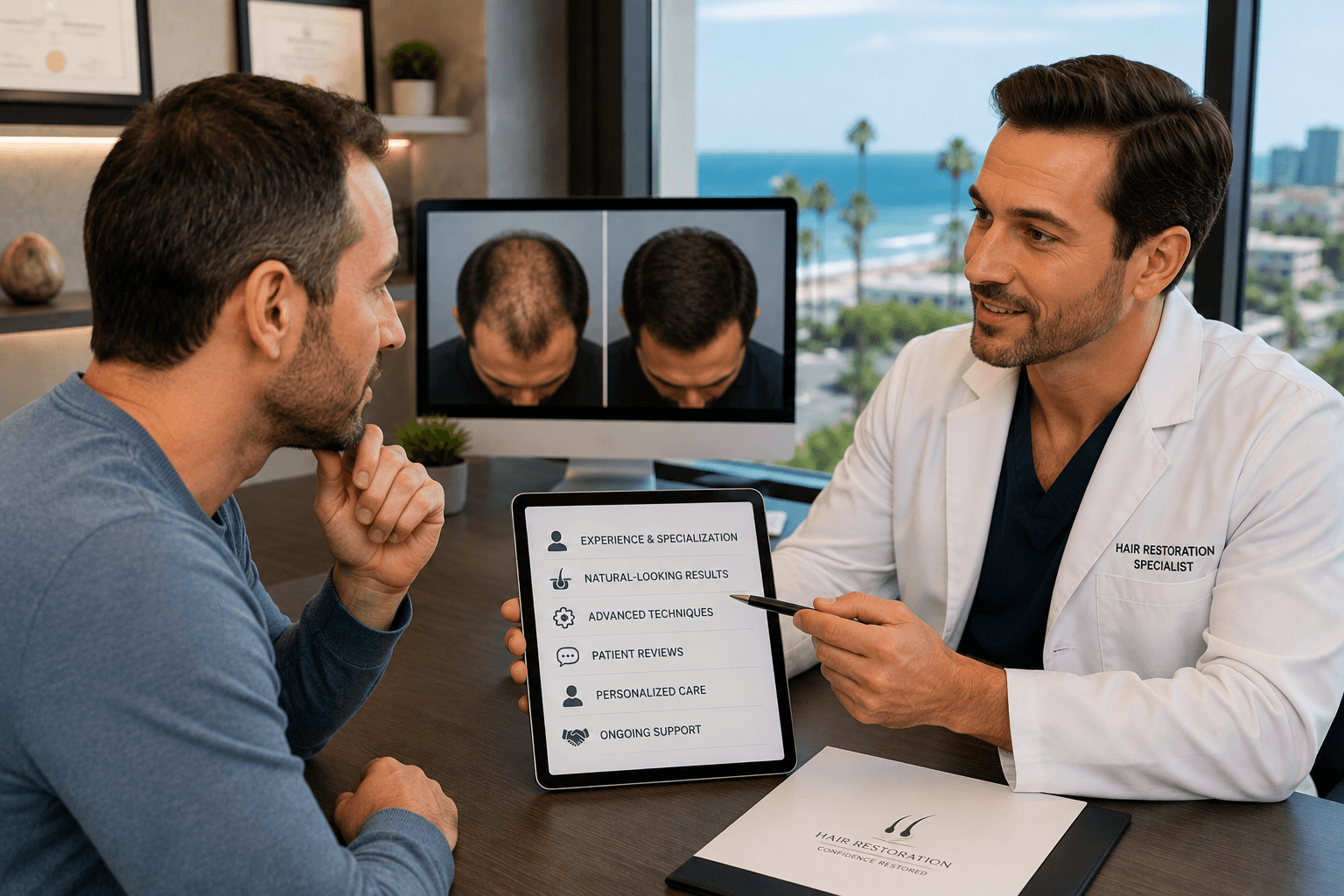
A reputable hair implant clinic should be able to clearly explain its process from consultation through recovery, without dodging questions or rushing you toward a decision. It should have a real, physical facility you can visit or at least see documented, rather than operating out of a pop-up location. You can get a feel for the environment and setup at our facility before ever booking anything.
It should also be transparent about outcomes. Clinics that are confident in their work tend to have a visible library of before and after results and patient feedback you can actually read, not just a handful of curated testimonials. Genuine reviews from real patients, including ones that mention the consultation experience and aftercare, tell you a lot more than a polished ad ever will.
How Do You Know If a Clinic Follows Proper Safety and Sterilization Protocols?
This is the part most patients skip past, and it's arguably the most important one. Hair transplantation is a surgical procedure, even in its minimally invasive forms, which means infection control and procedural safety should never be an afterthought.
Ask whether the clinic follows a documented sterilization and infection prevention policy, not just a verbal assurance that "everything is clean." Clinics that take this seriously usually have a written protocol they can reference, covering everything from instrument sterilization to how the treatment area is prepared. A clinic that has thought this through in writing, rather than improvising it, is generally one that treats patient safety as a system rather than a habit.
It's also worth asking how the clinic handles unexpected reactions during a procedure. A facility with an actual emergency response plan in place, reviewed and practiced rather than just assumed, is a meaningful signal of how seriously they take patient wellbeing.
What Questions Should You Ask During a Consultation?
A consultation should feel like a conversation, not a sales pitch. If a clinic is pressuring you to book same-day or making it hard to ask questions, that's worth paying attention to.
Some useful questions to bring with you include asking how the provider evaluates candidacy, what specific technique they recommend for your hair loss pattern and why, how many grafts you might realistically need, and what the expected timeline looks like from procedure day to seeing final results. You should also ask directly what happens if you're not satisfied with the initial consultation. A clinic confident in its process won't flinch at that question.
At California Hair and Skin Institute, hair restoration consultations are built around this kind of honest evaluation rather than a scripted upsell, which is exactly what you should expect anywhere you go.
Who Is a Good Candidate for Hair Implants?
Not everyone who is losing hair is automatically a candidate for a transplant, and a clinic that tells you otherwise without an evaluation should raise a flag. Candidacy generally depends on factors like the pattern and stage of hair loss, the availability of healthy donor hair, overall scalp health, and general medical history.
This is exactly why patient selection criteria matter so much. A clinic that applies clear, consistent criteria for evaluating hair transplant candidates is one that's making decisions based on what will actually work for you, not just what will get you to sign up. If someone is willing to tell you that you might need to wait, use a different approach first, or that a transplant isn't the right fit yet, that honesty is a good sign, not a red flag.
What Hair Restoration Techniques Should a Good Clinic Offer?
Technique matters, but so does judgment about which technique fits your situation. Follicular unit extraction, commonly known as FUE, has become the preferred approach for most patients because it avoids a linear scar and generally allows for a quicker recovery compared to older strip methods.
At this practice, FUE hair transplants using NeoGraft allow individual follicles to be extracted and placed with precision, which tends to produce a more natural-looking hairline and density pattern. Some patients also benefit from PRP or PRF as a complementary treatment to support healing or strengthen thinning areas, either alongside a transplant or as an earlier-stage option depending on where things stand. You can see the full range of approaches under hair restoration services.
What Should Aftercare and Follow-Up Look Like?
The procedure itself is only part of the story. What happens in the weeks and months afterward has a real impact on how the final result turns out. A clinic worth choosing should walk you through a clear post-operative care plan, covering things like how to sleep, when you can resume exercise, and how to protect the grafts while they take hold.
Just as important is what happens after the initial healing period. Follow-up appointments give your provider a chance to check progress, address any concerns early, and make sure everything is developing the way it should. This ongoing relationship, rather than a one-and-done transaction, is often what separates a clinic that genuinely cares about outcomes from one that's simply moving on to the next patient.
If you're still comparing options, it's worth reading through the general services page and frequently asked questions for a fuller picture of what ongoing care typically involves at a well-run practice. This page was updated for August 2026 to reflect current best practices in hair restoration care.
Frequently Asked Questions
How long does it take to see results after visiting a hair implant clinic? Most patients start noticing early growth around three to four months after the procedure, with fuller, more noticeable results developing over eight to twelve months as transplanted follicles mature.
Is a hair implant clinic only for men? No. Women experiencing thinning at the hairline, part line, or eyebrows can also be good candidates, and many clinics, including this one, offer options specifically suited to female hair loss patterns.
Does choosing a hair implant clinic with strict safety protocols cost more? Not necessarily. Pricing depends more on the number of grafts and technique used than on whether a clinic follows proper safety standards. Skipping safety protocols to save money is never a reasonable trade-off.
Can I combine a hair transplant with other treatments at the same clinic? Often, yes. Many patients pair a transplant with PRP to support healing, and some also address related concerns like thinning eyebrows during the same overall treatment plan.
What's the first step if I think I need a hair implant clinic? Booking a consultation is the best starting point. A qualified provider can evaluate your hair loss pattern, discuss realistic options, and let you know whether you're currently a good candidate for a transplant.
So, Ready to Stop Googling and Start Getting Answers?
Choosing a hair implant clinic isn't something to decide based on whoever has the flashiest ad or the fastest appointment slot. It's a decision that deserves the same scrutiny you'd give any other medical procedure, because that's exactly what it is. Look for clear protocols, honest consultations, documented results, and a team that treats aftercare as seriously as the procedure itself. If you're in the San Diego, California area and ready to get real answers instead of more search results, reaching out for a consultation is a solid next step. You can also explore the homepage for a broader look at what the practice offers before you decide.