

Why Is My Hair Falling Out? A San Diego Guide to Hair Loss Treatment
Updated August 2026.
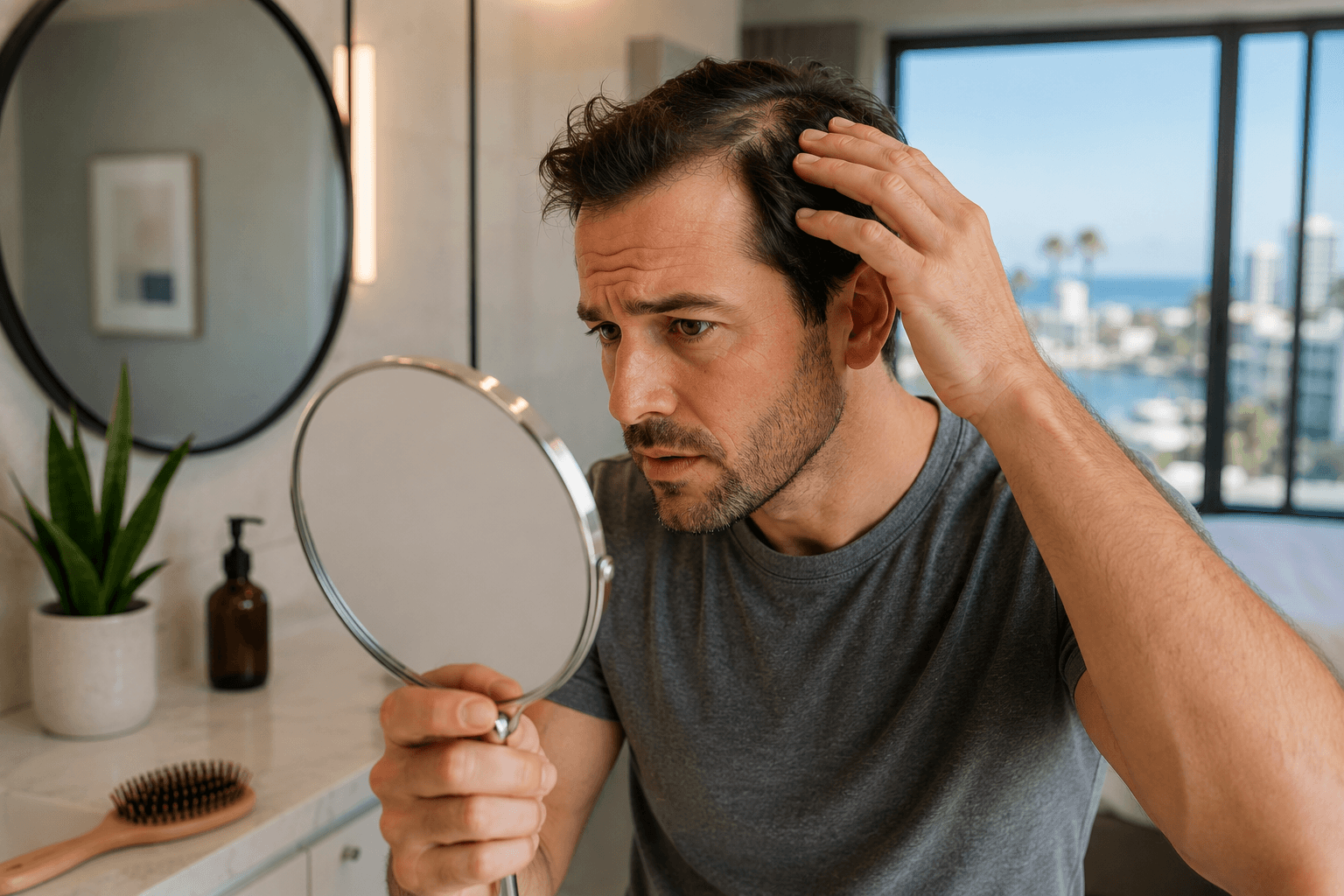
Finding a few extra strands on your pillow or in the shower drain is normal. Noticing a widening part, a thinning crown, or handfuls of hair coming out when you brush is a different story, and it's usually the moment people start searching for answers. If you've been typing "why am I losing so much hair" into Google at 11 p.m., you're not alone, and you're in the right place.
At California Hair and Skin Institute in San Diego, we talk to people every week who are dealing with hair loss for completely different reasons. Some are watching a family pattern repeat itself. Others are recovering from a stressful year, a medical event, or months of tight hairstyles. The good news is that hair loss treatment has come a long way, and understanding what's actually happening to your scalp is the first step toward doing something about it.
What Causes Hair Loss in the First Place?
Hair loss isn't one condition. It's a symptom with several possible root causes, and figuring out which one applies to you matters because it changes what actually helps.
Is It Genetic Hair Loss (Androgenetic Alopecia)?
The most common cause of hair thinning in both men and women is androgenetic alopecia, more commonly known as male or female pattern baldness. It's driven by genetics and a hormone byproduct called DHT, which gradually shrinks hair follicles until they stop producing visible hair. In men, this typically shows up as a receding hairline and thinning crown. In women, it usually looks like a widening part and overall reduced density rather than a receding hairline.
Could Stress Be Causing My Hair to Shed?
Telogen effluvium is a temporary form of hair shedding triggered by physical or emotional stress, illness, surgery, rapid weight change, or hormonal shifts like pregnancy and childbirth. Unlike pattern baldness, it tends to resolve once the underlying stressor is addressed, though it can take several months for shedding to slow down.
What About Tight Hairstyles and Traction Alopecia?
Constant tension from ponytails, braids, weaves, or extensions can pull on the follicle until it's damaged, a condition called traction alopecia. Caught early, it's often reversible. Left unaddressed for years, it can cause permanent thinning along the hairline and temples.
Are Nutritional Deficiencies or Medical Conditions to Blame?
Low iron, vitamin D deficiency, thyroid disorders, and certain autoimmune conditions like alopecia areata can all contribute to hair loss. This is one reason a proper evaluation matters before jumping into any treatment plan.
What Are the Early Signs of Hair Loss?
Catching hair loss early gives you more options. Some signs worth paying attention to include a part that looks wider than it used to, more visible scalp under bright light, a hairline that seems to be creeping backward, noticeably thinner ponytails, or excessive shedding that continues for more than a few months. If any of this sounds familiar, it's worth getting a professional opinion rather than waiting to see if it resolves on its own.
When Should You See a Professional About Hair Loss?
A good rule of thumb is to seek an evaluation if shedding has lasted longer than three months, if you notice patchy bald spots, if thinning is affecting your confidence, or if over-the-counter shampoos and supplements haven't made a difference. Hair loss is generally easier to manage, and results are generally more predictable, the earlier it's addressed.
What Hair Loss Treatments Actually Work?
This is where things get encouraging. Depending on the cause and stage of your hair loss, there are several evidence-backed approaches worth discussing with a specialist.
PRP and PRF Therapy for Thinning Hair
Platelet-rich plasma (PRP) and platelet-rich fibrin (PRF) treatments use a concentration of your own blood's growth factors to stimulate dormant follicles and support healthier, thicker regrowth. It's a minimally invasive option that works well for people in the earlier to moderate stages of thinning who still have active follicles to stimulate. You can read more about how this works on our PRP and PRF page.
FUE Hair Transplant Using NeoGraft
For more advanced hair loss, particularly a receding hairline or thinning crown that hasn't responded to other treatments, a follicular unit extraction (FUE) transplant may be the better long-term solution. Using the NeoGraft system, individual follicles are transplanted from denser areas of the scalp to thinning areas, resulting in natural-looking, permanent regrowth. Learn more on our FUE hair transplant page.
Combining Treatments for Better Results
Many patients see the best outcomes when PRP is used alongside a transplant, both to support graft survival and to maintain density in surrounding hair over time. This is something we discuss during a personalized consultation, since everyone's scalp and goals are different.
Who Is a Good Candidate for Hair Loss Treatment?
Good candidates typically have realistic expectations, are in overall good health, and are dealing with either genetic thinning, traction alopecia, or shedding that hasn't resolved on its own. The best way to know for sure is a consultation where we can examine your scalp, discuss your history, and map out a plan based on your specific pattern of loss.
What Happens During a Hair Restoration Consultation?
During your visit, we'll look at your scalp under proper lighting, talk through your medical history and family pattern of hair loss, and discuss which treatment, or combination of treatments, makes the most sense for your goals and budget. There's no one-size-fits-all answer, which is why this step matters so much. You can book yours through our hair restoration consultations page.
How Long Does It Take to See Results?
This depends on the treatment. PRP typically requires a series of sessions spaced a few weeks apart, with visible improvement over three to six months. FUE transplant results take longer to mature, with initial shedding of transplanted hair in the first few weeks (this is normal) followed by new growth starting around month three and continuing to fill in over nine to twelve months. Patience really is part of the process with any hair restoration treatment.
Finding Hair Loss Treatment in San Diego
If you're searching for hair loss treatment near San Diego, California, it helps to work with a team that specializes specifically in hair restoration rather than a general medical spa that offers it as an afterthought. Our team at California Hair and Skin Institute focuses on hair and scalp health, which means more experience reading the specific patterns of loss we see in this community and matching them to the right treatment.
Frequently Asked Questions
Can hair loss be reversed? It depends on the cause. Shedding from stress or nutritional deficiency often improves once the underlying issue is corrected. Genetic hair loss can't be reversed on its own, but treatments like PRP and FUE transplants can restore density and regrowth in thinning areas.
Is hair loss treatment painful? PRP involves a fine needle and typically causes mild, temporary discomfort. FUE transplants are performed under local anesthesia, so the procedure itself is not painful, though some tenderness during recovery is normal.
At what age does hair loss usually start? Genetic hair loss can begin as early as the late teens or twenties, though it's more commonly noticed in the thirties and forties. Stress-related shedding and traction alopecia can occur at any age.
Do women experience hair loss too? Yes. Female pattern hair loss is extremely common and often presents differently than in men, typically as diffuse thinning rather than a receding hairline.
How do I know which treatment is right for me? The only reliable way is a professional evaluation. A consultation allows us to examine the cause and stage of your hair loss and recommend a plan tailored to your scalp and goals.
The Bottom Line on Thinning Hair (And Why Waiting Rarely Helps)
Hair loss can feel like something you're supposed to just accept, but it doesn't have to be. Whether you're dealing with early thinning, a receding hairline, or shedding that started after a stressful season of life, understanding the cause is what makes treatment actually work. If you're in the San Diego area and ready to get real answers, we'd love to see you for a consultation and talk through what's actually going on with your hair.