

What Should You Know Before a Hair Transplant in San Diego, California?
Updated October 2026
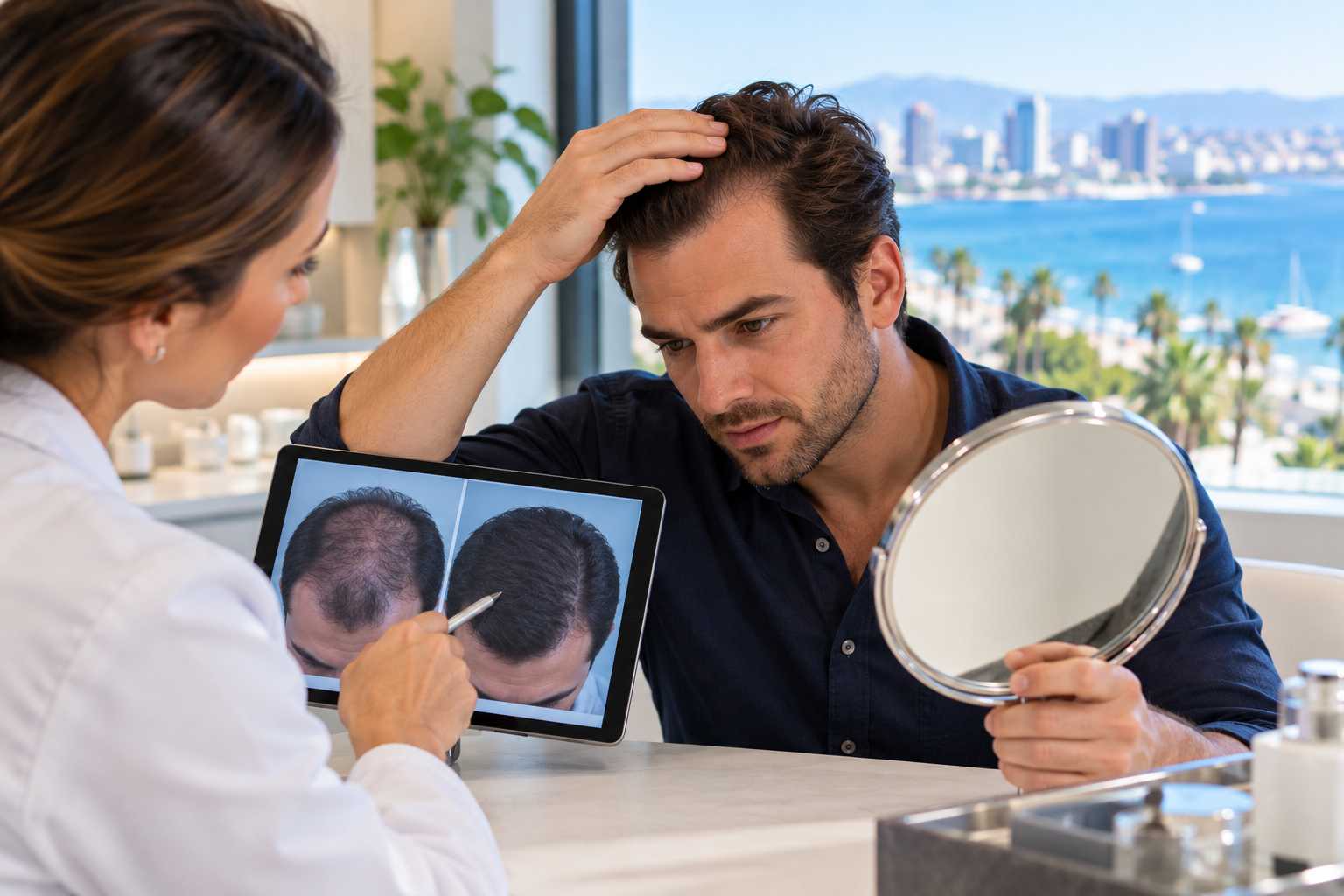
Deciding to look into a hair transplant usually comes after years of trying other things first, thicker shampoos, topical treatments, maybe a new haircut to disguise a thinning crown. At some point, many people reach a stage where those efforts stop being enough, and a transplant becomes worth a real conversation. If you are at that point, it helps to actually understand how the procedure works before you sit down for a consultation in San Diego, California.
Why Do People Eventually Consider a Hair Transplant?
What Makes Hair Loss Reach a Point Where Transplantation Is Considered?
Once follicles have miniaturized and stopped producing hair altogether, non surgical treatments generally cannot bring them back. A transplant works differently because it relocates active, healthy follicles rather than trying to revive ones that are no longer functioning. This is usually the point where people start seriously researching surgical options.
Is a Receding Hairline Usually the First Sign?
For many men, yes. A receding hairline along the temples is often one of the earliest and most visible signs of pattern hair loss, and it is one of the most common reasons people begin exploring transplant options. Our page on receding hairline explains how this pattern typically develops.
Can Stress Related Hair Loss Lead to a Transplant Being Necessary?
Not usually on its own, since stress related shedding is often temporary. However, chronic stress can sometimes accelerate underlying genetic thinning that eventually does require a more permanent solution. We covered this connection in more depth in our post on stress related hair loss and hair transplants.
How Does an FUE Hair Transplant Actually Work?
What Does FUE Stand For and Why Does It Matter?
FUE stands for follicular unit extraction, a technique where individual hair follicles are removed one at a time from a donor area, typically the back or sides of the scalp, and then transplanted into thinning or balding areas. It is a more precise, less invasive approach compared to older strip harvesting methods. Our FUE hair transplant using NeoGraft page explains the specific technology and process we use.
Why Is the Donor Area So Important?
The donor area is chosen because those follicles are typically resistant to the hormonal factors that cause pattern thinning elsewhere on the scalp. This means transplanted hair generally continues growing normally once it is relocated, which is the entire premise behind why the procedure works long term.
What Does the Procedure Day Actually Look Like?
Procedure day typically involves numbing the scalp, extracting follicles from the donor area, and carefully placing them into the recipient area based on a pattern designed to look natural. The full process follows a structured clinical approach, which you can read about on our FUE surgical protocol page.
Who Is Actually a Good Candidate?
Does Everyone With Thinning Hair Qualify for a Transplant?
Not necessarily. Candidacy depends on factors like the extent of hair loss, the quality and density of the donor area, scalp health, and overall medical history. Our patient selection criteria page outlines the factors that go into determining who is a strong candidate.
Is There an Ideal Age for a Hair Transplant?
There is no single ideal age, but providers often look for hair loss patterns that have stabilized enough to plan an effective, long lasting result. Very early, still progressing hair loss sometimes calls for a different initial approach before surgery is considered.
What If I Am Not Sure I Am a Candidate Yet?
That is exactly what a consultation is for. We covered this topic directly in our post on who is a good candidate for hair replacement in San Diego, California, which walks through the general criteria in more detail.
What Does Recovery Actually Involve?
How Much Downtime Should You Expect?
Most patients can return to normal daily activities within a few days, though strenuous exercise and certain activities are typically restricted for a longer stretch while the scalp heals. Redness and mild swelling in the first week are normal parts of the process.
When Does New Growth Start Showing?
Transplanted follicles go through a shedding phase before entering a new growth cycle, which means visible results take time and do not appear immediately. Most patients start seeing meaningful growth several months after the procedure, with fuller results continuing to develop over the following months.
What Kind of Aftercare Is Involved?
Following your provider's aftercare instructions closely has a real impact on how well the transplanted follicles take. Our post operative care protocol and post transplant care and follow up page outline what that process typically looks like.
What Should You Ask Before Committing to a Provider?
How Can You Tell If a Clinic Is Reputable?
Look for a clinic that follows clear clinical protocols, has documented safety and sterilization practices, and is transparent about realistic outcomes rather than overpromising. Our infection prevention and sterilization policy reflects the kind of standards worth asking about wherever you go.
Can You See Real Results Before Committing?
Yes, and you should ask to. Reviewing real before and after results can help set realistic expectations for your own outcome. You can view examples on our before and after page.
Frequently Asked Questions
How long does a hair transplant procedure usually take? Procedure length varies based on the number of grafts being transplanted, but many procedures take several hours to complete in a single session.
Is a hair transplant permanent? Transplanted follicles are generally resistant to the factors that caused the original hair loss, which is why results are typically considered long lasting.
Does a hair transplant hurt? The area is numbed before the procedure, so most patients report only mild discomfort during recovery rather than significant pain.
Can women get hair transplants too? Yes, though the underlying pattern of hair loss and candidacy criteria can differ from male pattern loss, which is why a tailored evaluation matters.
How soon can I see full results after a hair transplant? Final results typically take close to a year to fully develop, since hair growth is a gradual biological process that cannot be rushed.
Ready to Meet Your Future Hairline?
A hair transplant is a significant decision, and understanding the actual process, from candidacy to recovery, makes it much easier to feel confident moving forward. If you are ready to find out whether you are a good candidate, schedule a consultation with our San Diego, California team.